Key Takeaways
- User-Generated Content (UGC) is crucial for technology brands as it builds a level of trust and authenticity that traditional advertising cannot match.
- Implementing UGC formats such as unboxings, tutorials, and detailed reviews can decrease the Cost Per Acquisition (CPA) by up to 50%.
- A successful UGC strategy is founded on authenticity, collaboration with content creators, and integration across multiple marketing channels.
- Measuring the ROI of UGC is fundamental and is achieved through metrics like conversion rate, engagement, and customer lifetime value (LTV).
- The future of UGC in the technology sector is moving towards more immersive experiences, such as augmented reality and mass personalisation.
Contents
1What is UGC and Why It Builds Trust for Technology Brands
For technology brands, UGC is one of the most effective ways to build consumer trust, because real users sharing genuine experiences carry more credibility than polished corporate advertising. In a sector where innovation is constant and competition is fierce, that trust is the most valuable asset. Unlike polished, corporate advertising, UGC is real content, created by real users sharing their genuine experiences with tech products and services. From the unboxing of a new smartphone to a detailed tutorial for a SaaS software, this content resonates with audiences in a way no paid ad can, offering invaluable social proof.
For technology brands, UGC is not just a marketing tactic; it is a paradigm shift. It represents a move from a brand monologue to a dialogue with the community. This approach humanises technology, often perceived as cold or complex, making it more accessible and desirable. Studies show that According to Nielsen, 92% of consumers trust content from other users more than traditional advertising, which directly translates into higher conversion rates and a greater Return on Ad Spend (ROAS).
2The Psychology Behind UGC: Building Trust and Authenticity
The power of UGC lies in a fundamental psychological principle: social proof. When we see people like ourselves using and enjoying a technology product, our brain interprets it as a signal of validation. This phenomenon is particularly potent in the tech sector, where purchasing decisions often involve a significant investment and a learning curve. UGC acts as a bridge, reducing uncertainty and providing the reassurance consumers need to make a decision.
A staggering 79% of people state that UGC highly impacts their technology purchasing decisions, outperforming influencer recommendations and brand advertising.
Authenticity: The Antidote to Ad Fatigue
Modern consumers have developed a form of "ad blindness" to traditional advertisements. They are tired of corporate messaging and crave real connections. UGC, with its unfiltered and honest nature, cuts through this noise. A video shot on a mobile phone by a satisfied customer can be infinitely more persuasive than a high-budget production because it is perceived as real and trustworthy. This authenticity is the secret ingredient that makes UGC so effective at connecting with sceptical audiences.
""In a saturated market, the customer's voice is not just an opinion; it is the most powerful marketing tool a technology brand can possess.""
3Essential UGC Formats for Technology Brands
Not all UGC is created equal. For technology brands, certain formats are particularly effective at showcasing the value of their products and services. The key is to choose formats that not only demonstrate features but also tell a story and solve real problems for the user.
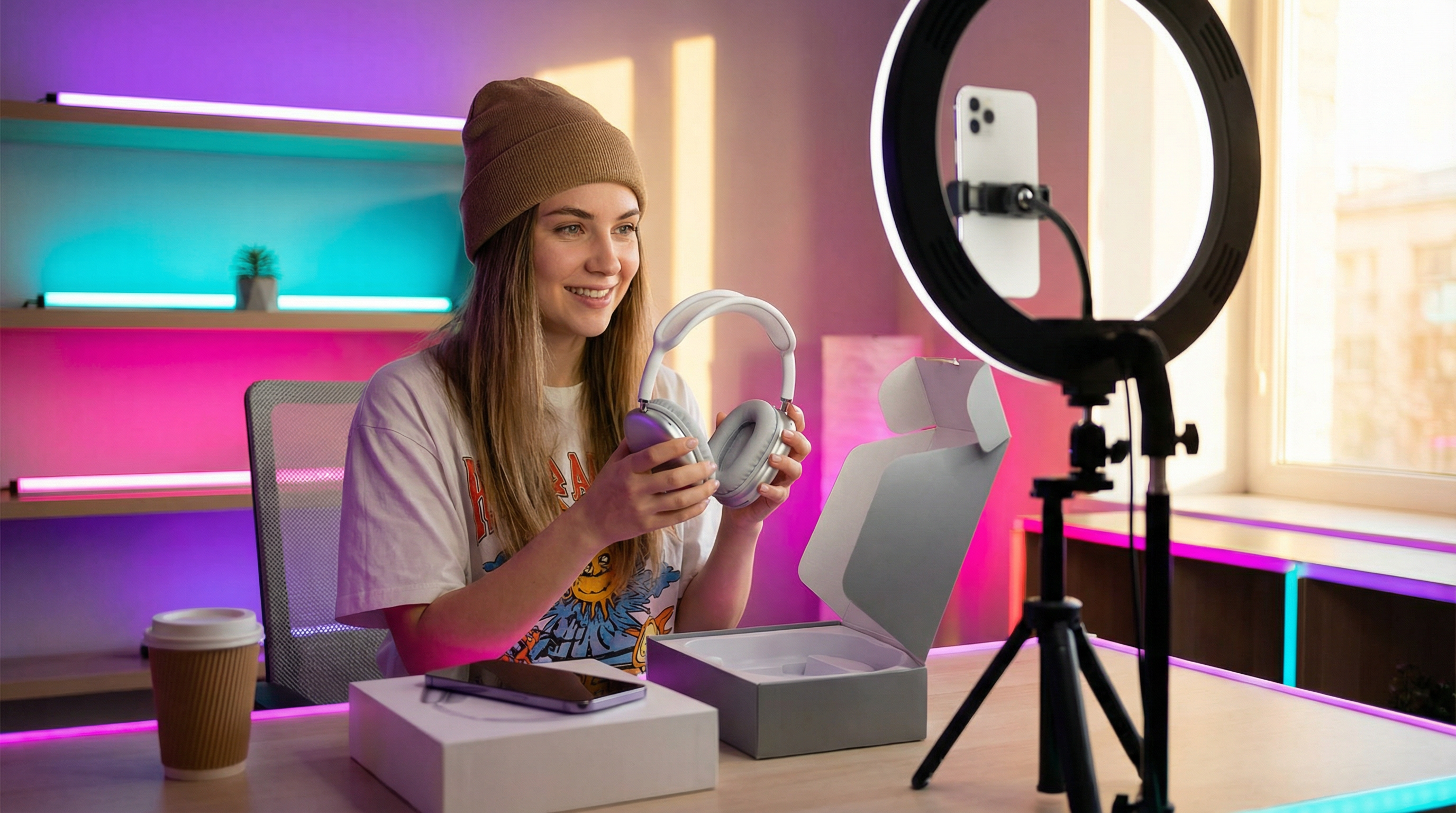
- Unboxing Videos: First impressions count, a lot. Unboxing videos capture the excitement and initial experience of receiving and opening a new gadget, creating significant anticipation.
- Video Reviews and Demonstrations: Seeing a product in action is crucial. Detailed reviews and usage demonstrations by real users answer key questions and show how the product fits into daily life.
- Tutorials and How-To Guides: Especially for SaaS, apps, and complex software, user-created tutorials are pure gold. They simplify concepts, show practical use cases, and accelerate product adoption.
- Testimonials and Case Studies: UGC that shows tangible results (e.g., how a productivity app helped someone save 10 hours a week) is extremely persuasive and builds a solid business case.
4How UGC Reduces Cost Per Acquisition (CPA) in Tech Campaigns
One of the most impactful advantages of UGC is its ability to dramatically reduce the Cost Per Acquisition (CPA). By integrating UGC into paid ads on platforms like Meta and TikTok, technology brands can see a significant improvement in performance. Ads that use authentic UGC tend to have higher click-through rates (CTR) and superior conversion rates because they blend natively with the platform's content and are not perceived as intrusive advertising.
| Campaign Metric | Traditional Ad (Average) | Ad with UGC (Average) | Potential Improvement |
|---|---|---|---|
| Click-Through Rate (CTR) | 1.5% | 4.0% | +167% |
| Conversion Rate | 2.0% | 4.5% | +125% |
| Cost Per Acquisition (CPA) | £42 | £21 | -50% |
| Return on Ad Spend (ROAS) | 3:1 | 7:1 | +133% |
Integrating UGC into your `paid social media ads` not only reduces costs but also increases the relevance and impact of your campaigns, generating a positive performance cycle.
5Implementing a Winning UGC Strategy: A Step-by-Step Guide
Launching a UGC strategy might seem daunting, but it can be broken down into manageable steps. The goal is to create a sustainable system that encourages the creation of high-quality content by your community and leverages it effectively in your marketing.
Step 1: Define Your Objectives and KPIs
Before you start, be clear about what you want to achieve. Are you looking to increase brand awareness, generate leads, boost sales of a specific product, or reduce CPA? Define your Key Performance Indicators (KPIs) so you can measure success. For example, an objective could be "to reduce CPA by 20% in 3 months using UGC ads on TikTok."
""UGC transforms users from mere consumers into brand ambassadors, creating a cycle of trust and organic growth that is invaluable.""
Step 2: Encourage and Collect Content
Actively encourage your customers to create content. Launch campaigns with branded hashtags, run contests, or simply ask your customers to share their experiences. Use tools to aggregate and filter this content efficiently. Collaborating with a `UGC agency` can provide you with a steady stream of high-quality, ready-to-use content.
- Create a unique and easy-to-remember branded hashtag.
- Offer clear incentives for participation.
- Feature the best content on your official channels.
- Simplify the content submission process.
Step 3: Secure Rights and Distribute
This is a critical step. Before using any content, ensure you have explicit permission from the creator. Once you have the rights, integrate the UGC across all your marketing channels: website, social media, email marketing campaigns, and of course, in your paid ads. Consistency and multi-channel distribution amplify the impact of UGC.
6Measuring the ROI of Your UGC Campaigns: Key Metrics
To justify the investment in UGC, it is essential to measure its Return on Investment (ROI). Fortunately, the impact of UGC is highly measurable through various digital metrics. Tracking these metrics will allow you to optimise your strategy and demonstrate the value of UGC to your company's stakeholders.
Brands that use UGC on their website tend to see a notable increase in web conversions compared to those that don't.
Focus on metrics that align with your business objectives. For instance, if your goal is conversion, measure the conversion rate of product pages that include UGC versus those that do not. If your goal is engagement, analyse the interaction rates (likes, comments, shares) of UGC compared to branded content. Web analytics tools and the dashboards of social media platforms are your best allies in this task.
7The Future of UGC in Technology Marketing
UGC is not a fleeting trend; it is a fundamental evolution in how brands and consumers interact. For technology companies, the future of UGC is even more exciting. We will see greater integration with emerging technologies like Augmented Reality (AR), where users can virtually "try out" gadgets from their homes. Personalisation will also play a key role, with brands using AI to tailor UGC to specific audience segments, creating hyper-relevant customer experiences.
Technology brands that embrace UGC will not only build a more loyal and engaged customer base but will also drive innovation by obtaining direct and authentic feedback from their users. In the next decade, leadership in the technology sector will not just depend on product innovation, but on the ability to build and mobilise a passionate community. UGC is the catalyst to achieve this.
?Frequently Asked Questions
Related Services
UGC Creator Management
At PlusROI Media, we manage a global network of over 2,000 verified UGC creators, specialising in creating authentic, platform-native content for ecommerce brands, mobile apps, fashion labels, and beauty companies worldwide. UGC Creator Management is the discipline of identifying the right creators, briefing them strategically, supervising production, and delivering polished assets with full usage rights: so your brand never has to worry about the logistics of content at scale. Our end-to-end process covers every stage: personalised casting based on your audience and niche, conversion-focused scripting, supervised filming, UGC-style editing with hooks and captions, and full paid media rights on delivery. Whether you need 5 videos a month or 500, the workflow stays consistent and quality-controlled. You can explore real brand results across sectors in our case studies . The connection between great UGC and advertising performance is direct. Content produced through our creator management programme is designed to perform natively on paid channels, particularly TikTok Ads and Instagram Ads , where authentic, creator-style videos consistently outperform polished brand productions in ad auctions. For brands also investing in Paid Social Media Ads across multiple platforms, the same creator assets can be deployed across Meta and TikTok under a single coordinated strategy. If you also need the full production pipeline handled as a standalone service, explore our UGC Video Production offering, which covers creative strategy, scripting, casting, and professional editing in a single 10-day process. Brands that want creator reach to extend organically can also combine UGC creator management with our Influencer Marketing service for broader audience coverage.
TikTok Ads
PlusROI Media is a specialist TikTok Ads agency helping international brands run performance campaigns on the world's fastest-growing social platform. From campaign architecture and pixel setup to creative production and daily budget optimisation, we manage everything needed to make TikTok a reliable, scalable acquisition channel for your brand. TikTok's algorithm rewards content that feels native to the feed: which is why UGC-style creatives are central to our approach. Our in-house production team works alongside our creator network to produce short-form videos that blend organically into users' For You pages, designed to capture attention in the first two seconds and drive measurable action. We handle TikTok Pixel setup, Conversions API (CAPI) integration, and advanced attribution so your data is accurate from day one. We manage budgets from €1,000 to €200,000 per month, with a structured testing-to-scaling methodology that identifies winning creatives before committing larger spend. Our approach is complementary to broader paid social strategies, if you want to extend reach beyond TikTok, see our Paid Social Media Ads service, which covers Meta and LinkedIn alongside TikTok. Brands selling physical products on the platform can also connect TikTok Ads directly to their storefront via our TikTok Shop management service. Creative production is built into the process. For brands that want a deeper look at how UGC is produced, visit our UGC Video Production page or explore our TikTok Marketing service for organic TikTok growth strategies that run in parallel with paid. For brands also running campaigns on Meta, our Facebook Ads service ensures your creative strategy is coordinated across both platforms.
Paid Social Media Ads
Paid Social Media Ads management at PlusROI Media covers the full multi-platform landscape: Meta (Facebook and Instagram), TikTok, and LinkedIn, under a single, coordinated strategy. Rather than treating each platform as a silo, we build cross-channel paid social programmes where budget allocation, creative strategy, and audience targeting are planned together to maximise the efficiency of your total advertising investment. One of the most consistent findings across paid social campaigns is that UGC-style creative (authentic, creator-filmed video content) tends to outperform polished studio productions in ad auctions, particularly on TikTok and Instagram Reels placements. Our UGC Creator Management team supplies the creative pipeline that feeds our paid media campaigns, ensuring a steady flow of fresh, tested content without creative fatigue. The production process behind each creative is detailed in our UGC Video Production service, which delivers publish-ready assets with full paid media rights in a standard 10-day turnaround. Our technical setup covers pixel implementation, Conversions API (CAPI) integration across Meta and TikTok, custom and lookalike audience construction, and multi-touch attribution modelling. We also manage retargeting sequences and catalogue campaigns for ecommerce brands, and run international campaigns across Spain, Latin America, the UK, and wider Europe. You can see how this approach has delivered results for brands across multiple sectors in our case studies . If you want to go deeper on a specific platform, explore our dedicated services: TikTok Ads , Facebook Ads , and Instagram Ads , each with platform-specific strategy, creative formats, and optimisation frameworks built in.
Contents