Key Takeaways
- An omnichannel UGC strategy unifies the customer experience and multiplies ROI by repurposing authentic content across all touchpoints.
- Adapting the format and message of UGC to each channel (social media, email, web, physical stores) is key to maximising its effectiveness.
- UGC increases brand authenticity, generating 85% more engagement than traditional branded content.
- Implementing an efficient workflow for curating, managing, and distributing UGC is fundamental to successfully scaling the strategy.
- Automation tools and UGC management platforms are essential for optimising resources and measuring the real impact of the omnichannel strategy.
Contents
1What is an Omnichannel UGC Strategy?
An omnichannel strategy with User-Generated Content (UGC) is a marketing approach that aims to unify the customer experience across all touchpoints, both online and offline, using authentic content created by users themselves. Unlike a multichannel approach, where channels operate independently, omnichannel synergistically integrates the web, social media, email marketing, and even physical stores. According to a study by the Aberdeen Group, companies with a strong omnichannel strategy retain an average of 89% of their customers, compared to 33% for those without.
UGC is the fuel that powers this machine. We are talking about reviews, photos, videos, and testimonials that customers share spontaneously. Integrating this content into an omnichannel strategy not only amplifies its reach but also multiplies its impact. It allows the customer's voice to resonate consistently in every interaction, building a coherent and, above all, credible brand narrative.
2Key Benefits of Integrating UGC into Your Omnichannel Strategy
Integrating UGC into an omnichannel framework offers transformative competitive advantages. The most obvious benefit is the exponential increase in authenticity. Modern consumers are wary of traditional advertising; in fact, 92% trust recommendations from other users more. By showing real customers using and enjoying your products on different channels, you humanise your brand and build a much stronger and more lasting emotional connection.
Increased Engagement and Conversion
User-generated content records significantly higher engagement rates. UGC campaigns on social media can increase interaction considerably. When this content is repurposed on the web, for example, on product pages, conversion rates can increase by up to 78%. An omnichannel strategy ensures that these benefits accumulate, creating a virtuous cycle where engagement on one channel drives conversion on another.
- Increased Trust: According to Stackla, 79% of people say that UGC highly impacts their purchasing decisions.
- Improved SEO: Fresh and relevant user-generated content can improve your search engine rankings.
- Cost Reduction: Reduces the need to create branded content from scratch, optimising the marketing budget.
"Brands that implement an omnichannel strategy with UGC can see a notable increase in their annual revenue."
A well-executed omnichannel strategy can improve customer loyalty markedly year-on-year compared to those without one.
3How to Adapt UGC for Each Channel: From Social Media to Physical Stores
The key to omnichannel success is not simply replicating the same content everywhere, but intelligently adapting it to the context of each channel. Each platform has its own language, format, and user expectations. An unboxing video that is a hit on TikTok may need a different edit to become an Instagram Reels ad or a dynamic banner for your website.
| Channel | Recommended UGC Format | Main Objective |
|---|---|---|
| Instagram/TikTok | Short videos, Reels, Stories with interactive stickers | Engagement and Brand Awareness |
| Website (Product Pages) | Customer photo galleries, reviews with images, video testimonials | Increase Conversion and Social Proof |
| Email Marketing | Customer photos in newsletters, testimonials in reactivation campaigns | Loyalty and Cross-selling |
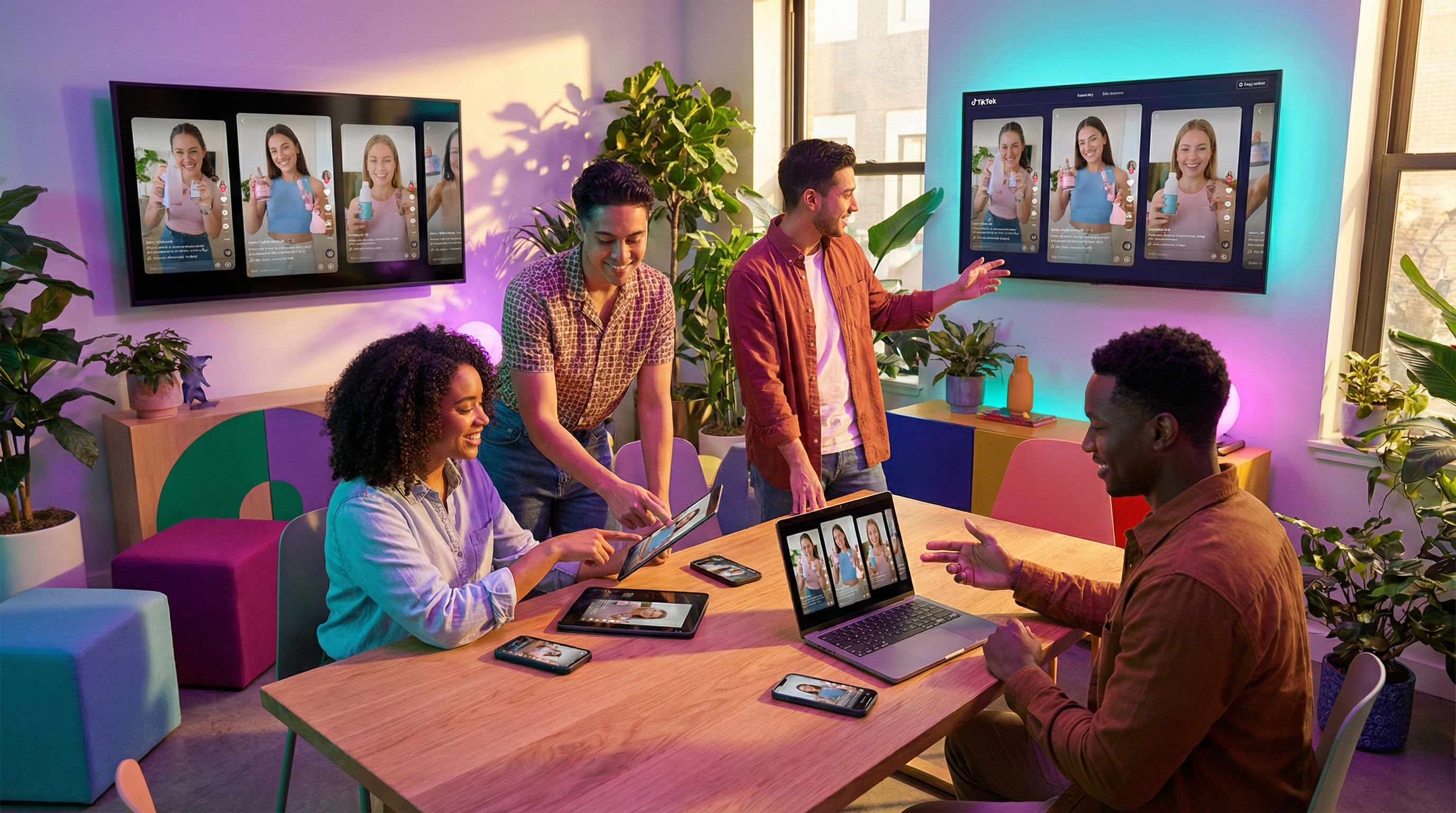
| Physical Stores / Retail | Screens with UGC videos, posters with customer photos | Connect the online and offline experience |
4The Perfect Workflow for Repurposing UGC Content
To scale an omnichannel UGC strategy, a clear and efficient workflow is essential. Without a defined process, content management can become chaotic and consume valuable resources. The goal is to create a system that allows for the agile and consistent identification, curation, rights acquisition, and distribution of content.
Phases of the Repurposing Workflow
- 1. Discovery and Curation: Actively monitor branded hashtags, mentions, and tags on social media. Use tools to aggregate all this content into a single dashboard.
- 2. Rights Request: Contact creators to obtain explicit permission to use their content. Automate this process with message templates, but maintain a personal touch.
- 3. Cataloguing and Tagging: Organise the approved content in a central library. Tag each piece with relevant information such as the featured product, content type (video, photo), usage rights, and potential performance.
- 4. Adaptation and Distribution: Adapt the content to the different formats of each channel. Schedule distribution using an omnichannel content calendar to ensure a constant and coherent cadence.
5Multiplying ROI: Measuring and Optimising Your Strategy
"According to Nielsen, 92% of consumers trust user-generated content more than traditional advertising. Authenticity is not an option; it's a necessity."
One of the biggest advantages of an omnichannel strategy is its ability to multiply the Return on Investment (ROI). The same UGC, when repurposed on different channels, generates value on each of them. A video that generates engagement on TikTok can also increase conversion in a Meta Ads campaign and reduce customer queries on a product page. To capitalise on this, measurement and optimisation must be continuous.
It is crucial to define clear KPIs for each channel and use analytics tools to track UGC performance. Analyse what type of content resonates most on each platform and with which audiences. A/B test different UGC creatives in your paid ads to see which generates a lower cost per acquisition (CPA). This mindset of constant optimisation is what transforms a good strategy into a growth machine.
6Tools and Automation for Efficient UGC Management
Managing a large-scale omnichannel UGC strategy manually is practically impossible. Technology is your best ally for automating repetitive tasks and obtaining accurate data. There are UGC management platforms that centralise content curation, rights management, and distribution. These tools can substantially reduce the time spent on campaign management.
Essential Types of Tools
- Content Curation Platforms: Tools like Taggbox or Flowbox that aggregate UGC from multiple sources.
- Rights Management Software: Solutions that automate the request and tracking of usage permissions.
- Social Scheduling Tools: Platforms like Buffer or Hootsuite to plan distribution on social media.
- Email Marketing Platforms: Integrate UGC galleries directly into your campaigns with tools like Mailchimp or Klaviyo.
Automation does not replace the need for a human touch. Use technology to be more efficient, but maintain authenticity in your communication with your community.
7Common Challenges and How to Overcome Them in Your Omnichannel Strategy
Implementing an omnichannel UGC strategy is not without its challenges. One of the most common is maintaining brand consistency across the diversity of user-generated content. To overcome this, it is vital to create a 'brand kit' for UGC, with clear but flexible guidelines that inspire creators without stifling their creativity. Another challenge is large-scale rights management, which can be mitigated with the right software tools and well-defined processes.
Finally, the fear of receiving negative content is a barrier for many brands. However, negative UGC, if managed transparently and proactively, can become an opportunity to demonstrate excellent customer service and build trust. Facing these challenges with careful planning and the right tools is what differentiates brands that simply use UGC from those that lead with a truly integrated omnichannel strategy.
?Frequently Asked Questions
Related Services
UGC Creator Management
At PlusROI Media, we manage a global network of over 2,000 verified UGC creators, specialising in creating authentic, platform-native content for ecommerce brands, mobile apps, fashion labels, and beauty companies worldwide. UGC Creator Management is the discipline of identifying the right creators, briefing them strategically, supervising production, and delivering polished assets with full usage rights: so your brand never has to worry about the logistics of content at scale. Our end-to-end process covers every stage: personalised casting based on your audience and niche, conversion-focused scripting, supervised filming, UGC-style editing with hooks and captions, and full paid media rights on delivery. Whether you need 5 videos a month or 500, the workflow stays consistent and quality-controlled. You can explore real brand results across sectors in our case studies . The connection between great UGC and advertising performance is direct. Content produced through our creator management programme is designed to perform natively on paid channels, particularly TikTok Ads and Instagram Ads , where authentic, creator-style videos consistently outperform polished brand productions in ad auctions. For brands also investing in Paid Social Media Ads across multiple platforms, the same creator assets can be deployed across Meta and TikTok under a single coordinated strategy. If you also need the full production pipeline handled as a standalone service, explore our UGC Video Production offering, which covers creative strategy, scripting, casting, and professional editing in a single 10-day process. Brands that want creator reach to extend organically can also combine UGC creator management with our Influencer Marketing service for broader audience coverage.
TikTok Ads
PlusROI Media is a specialist TikTok Ads agency helping international brands run performance campaigns on the world's fastest-growing social platform. From campaign architecture and pixel setup to creative production and daily budget optimisation, we manage everything needed to make TikTok a reliable, scalable acquisition channel for your brand. TikTok's algorithm rewards content that feels native to the feed: which is why UGC-style creatives are central to our approach. Our in-house production team works alongside our creator network to produce short-form videos that blend organically into users' For You pages, designed to capture attention in the first two seconds and drive measurable action. We handle TikTok Pixel setup, Conversions API (CAPI) integration, and advanced attribution so your data is accurate from day one. We manage budgets from €1,000 to €200,000 per month, with a structured testing-to-scaling methodology that identifies winning creatives before committing larger spend. Our approach is complementary to broader paid social strategies, if you want to extend reach beyond TikTok, see our Paid Social Media Ads service, which covers Meta and LinkedIn alongside TikTok. Brands selling physical products on the platform can also connect TikTok Ads directly to their storefront via our TikTok Shop management service. Creative production is built into the process. For brands that want a deeper look at how UGC is produced, visit our UGC Video Production page or explore our TikTok Marketing service for organic TikTok growth strategies that run in parallel with paid. For brands also running campaigns on Meta, our Facebook Ads service ensures your creative strategy is coordinated across both platforms.
Paid Social Media Ads
Paid Social Media Ads management at PlusROI Media covers the full multi-platform landscape: Meta (Facebook and Instagram), TikTok, and LinkedIn, under a single, coordinated strategy. Rather than treating each platform as a silo, we build cross-channel paid social programmes where budget allocation, creative strategy, and audience targeting are planned together to maximise the efficiency of your total advertising investment. One of the most consistent findings across paid social campaigns is that UGC-style creative (authentic, creator-filmed video content) tends to outperform polished studio productions in ad auctions, particularly on TikTok and Instagram Reels placements. Our UGC Creator Management team supplies the creative pipeline that feeds our paid media campaigns, ensuring a steady flow of fresh, tested content without creative fatigue. The production process behind each creative is detailed in our UGC Video Production service, which delivers publish-ready assets with full paid media rights in a standard 10-day turnaround. Our technical setup covers pixel implementation, Conversions API (CAPI) integration across Meta and TikTok, custom and lookalike audience construction, and multi-touch attribution modelling. We also manage retargeting sequences and catalogue campaigns for ecommerce brands, and run international campaigns across Spain, Latin America, the UK, and wider Europe. You can see how this approach has delivered results for brands across multiple sectors in our case studies . If you want to go deeper on a specific platform, explore our dedicated services: TikTok Ads , Facebook Ads , and Instagram Ads , each with platform-specific strategy, creative formats, and optimisation frameworks built in.
Contents